Redundancy isn't failure
On the strange grief of redundancy, saying goodbye to The Telegraph, women in sports media and what’s next

Last summer, after a period of illness while preparing to return to work, I was made redundant from The Telegraph. It has taken time to say that publicly, because for once when it came to writing I was lost for words. I want to say clearly that I am extremely grateful to The Telegraph for the opportunities and trust I was affor
ded.
Intellectually, I knew redundancy was not failure. Emotionally, it took me much longer to believe that. I felt grief-stricken and a little lost, which I suspect is far more common than we admit. It was a structural, business-led decision, but that does not stop you feeling devastated when, in my case, the job had become my identity. Sport has become much better at talking about identity shifts when careers change. I’m not sure we are nearly as good at doing that in journalism as a professional community.
One of the most painful aspects of redundancy was not being able to say goodbye properly. I was off sick with endometriosis and stress when I officially stopped working for The Telegraph. I had worked with so many people I genuinely cared for, learned from, laughed with and became friends with over the years. Another reason I am writing this is to give myself the chance to say goodbye.
Before joining The Telegraph, there had been years of freelancing, and those years were often gruelling and uncertain. Being on staff was a huge source of pride. Losing that identity, “Kate the Telegraph sports journalist”, was massive. It had been hard won, and it meant the world to me.
Something I have missed more than the buzz of a stadium or the adrenaline rush of filing on a tight deadline is the people: direct colleagues, colleagues at other media organisations, communications and public relations professionals, the many talented photographers I collaborated with, brilliant athletes, and experts from fields as varied as psychology, marketing and health in sport. Losing daily contact with this broad spectrum of people has been one of the hardest parts.
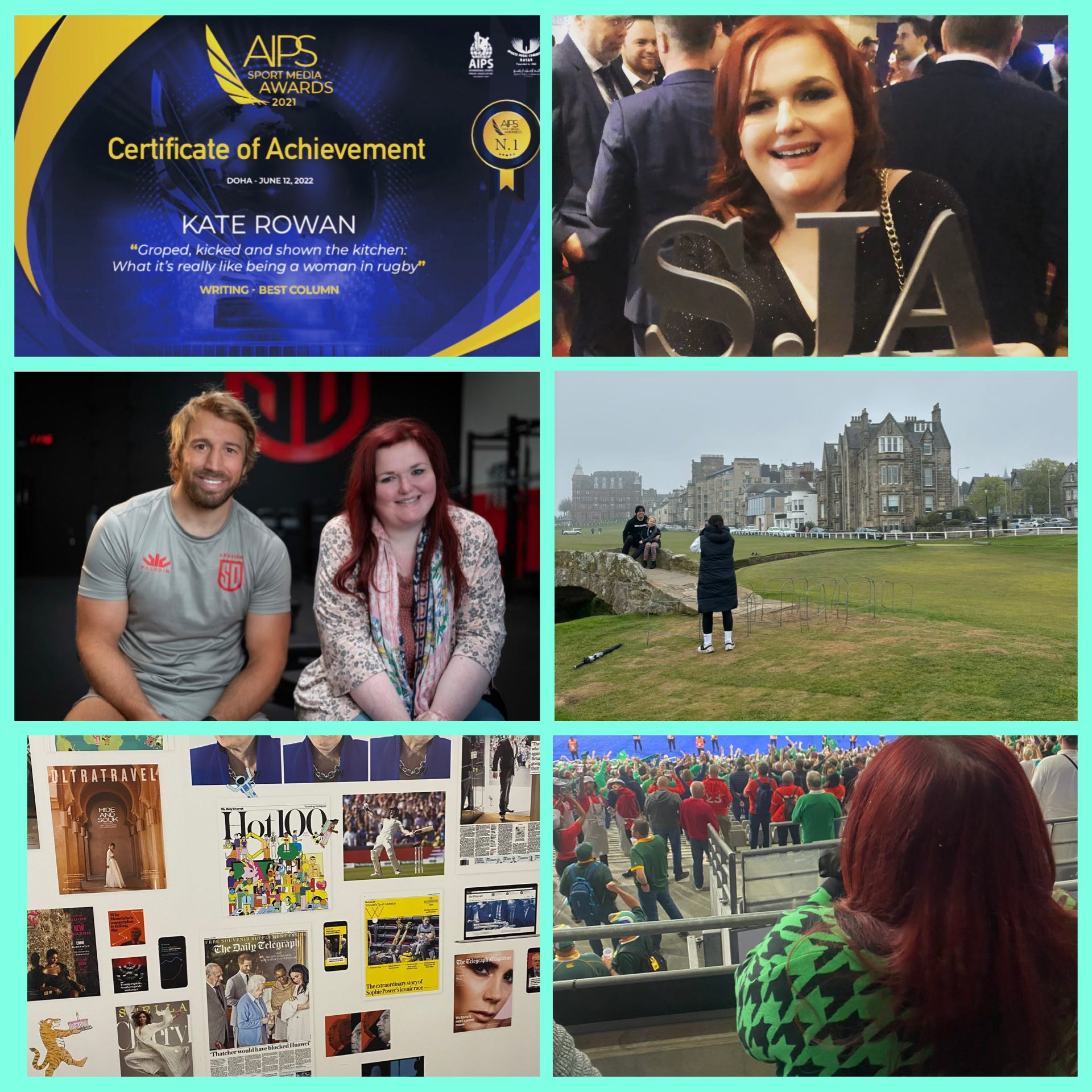
That is also why my gratitude to The Telegraph is so genuine. The paper allowed me to pursue work that mattered deeply to me. Coming from Ireland, some of those opportunities felt especially significant. Covering events like Wimbledon and The Open, year after year, was a girlhood dream. I was also given the support and freedom to build a body of agenda-setting work that went on to receive five British Sports Journalism Awards (SJAs) nominations, including two Bronze Awards. In the initial wave of grief, I mourned that work more than I celebrated it.
I’m especially proud of being a founding contributor to Telegraph Women’s Sport. I helped shape it from when I joined Telegraph Sport in 2017 and continued to cover women’s sport throughout my time there. Once the dedicated team was hired and TWS formally launched in March 2019, I became much less vocal publicly about my contribution because I wanted those colleagues to shine. Looking back, I think that generosity may have made me too quiet about something I had every reason to be proud of. TWS was an industry-changing initiative (conceived by former Telegraph head of sport Adam Sills and with a huge effort a
cross the sports desk) and I’m extremely proud to have played a part in building it.
There is a wider industry issue here: it still feels slightly bizarre that women should have to explain or justify covering both men’s and women’s sport. Part of me feels I shouldn’t have to say this but I never saw women’s sport as a stepping stone to anything else. I cared about it in its own right and, if anything, more deeply than men’s sport at certain points.
I’m proud of the work I did on sexism in sport and sports media. In 2021, The Telegraph gave me the space and support to write about my experience of covering rugby, and that piece went on to win AIPS Global Sports Column of the Year in 2022. I remain grateful for the editorial backing behind it, including from male editors who took the subject seriously and helped me shape the piece with real care (Andrew Fifield deserves a special mention). That matters to me, because this is not a simple story about men on one side and women on the other. Some of the best support I received in my career came from men.
At the same time, I would feel dishonest if I pretended there were not still serious problems in sports media as a whole. I can only really speak from my own experience, which is on the written side. There is still too much commentary on women’s appearance, too much rumour, and too little recognition that there should be room for different kinds of female voices and personalities. Too often, it can still feel as though there is a narrow, unspoken uniform for how a woman in sports media is meant to look, think, sound and behave.
An aspect I have found extremely difficult in the broader media landscape is the rumour culture that can grow around women in journalism, particularly personal lives, health, ambition and mental health. It is still somewhat taboo to address, and there is always the fear of seeming precious when you work in what is perceived to be such a privileged industry. That has felt jarring to me because sports journalism now asks athletes to speak with honesty and vulnerability about mental health and wellness. Yet the industry itself can be immature, contradictory and unkind when those same questions attach themselves to women within it. Sometimes silence has a way of filling gaps in our stories. Another reason for writing this is to put this whole experience into my own words.
It is no secret that I have endometriosis, and for most of my time at The Telegraph I took very little sick leave until the latter stages of my time there.
Women can work at the highest level with endometriosis. We see that in sport. Leah Williamson has spoken about living with endometriosis while captaining England, and Emma Hayes has talked powerfully about the condition too. In fact, I was the first journalist she gave a major newspaper interview to on her experience. I say that not to make myself the story, but because I know how easy it is for women’s health to be misunderstood, diminished, or quietly turned into a question mark over their ability to do their job. It should not be. I always appreciated how I could be open about endometriosis at The Telegraph.
I have been working quietly while thinking about what I want the next chapter of my more public-facing work life to be. I dedicated my life to sports journalism for over a decade (eight years at The Telegraph), and I needed space to think and rediscover the broader interests that have always existed alongside sport in my life.
There is one bigger project that I hope to share soon. It has been important to build something from scratch and allow my voice to come through in a completely different way. I am both excited and mildly terrified!
Redundancy isn’t failure. However, it took me longer than I would have liked to feel that. I’m deeply grateful for my years at The Telegraph. And if we crossed paths over those years in the middle of a sometimes crazy and surreal industry, I would genuinely love to reconnect and catch up. I mean this not as a networking opportunity, but on a human level. It is the people I miss most.
Great read ❤️
Beautifully written Kate- like all of your work. Miss you in the press room and hope to see you about somewhere soon, and to read more of your words. I always had admiration for the time and mentorship you gave those trying to get into the profession, and wish you every success.